Friday, March 8, 2013

2014 Kia Forte: In It To Win It: New Compact Sedan has an Ample Bag of Tricks


With the 2014 Kia Forte sedan now in the picture, the Korean automaker has reinvented its compact sedan twice within the last five years. While that may seem excessive, the cutthroat compact car segment is like the fashion world. You might only be 27 years old, but that translates to 59 in model years. With the 4-year-old Forte losing relevance, Kia had to act fast. Luckily, it already had a winning formula, thanks to the current-gen Optima midsize sedan, which is the brand’s best-selling model to date. The Optima has earned lots of brownie points for its sleek styling, performance, and smorgasbord of premium features, and the 2014 Forte doesn’t deviate from that formula. Defined by curvaceous body lines, the familiar tiger nose grille, sweeping head- and taillights, and a sharply raked windshield, the Forte commands attention, especially EX models equipped with LED accents above projector halogen headlights. (HIDs are optional.) The strips are slanted into the grille, resembling furrowed eyebrows that may intimidate those who look in their rearview mirrors. It’s wider (0.2 inch), longer (1.2 inches), and lower (1.0 inch) than its predecessor, with a wheelbase 2 inches longer at 106.3 inches.
 
Looks aside, lots of tinkering went on beneath the skin. A reworked direct-injection, 2.0-liter I-4 feeds 173 horses and 154-lb-ft of torque to the front tires via a six-speed automatic transmission, allowing the compact to scoot from 0 to 60 mph in 7.8 seconds and reach the quarter mile in 16.0 seconds at 87.3 mph. The numbers are leaps and bounds over the last Forte EX we tested in 2011, which needed 9.2 seconds to reach 60 mph from a standstill and 17.1 seconds to pass the quarter-mile line at 83.2 mph. The Honda Civic and Toyota Corolla may best the Forte in compact sales, but the Korean compact puts them to shame in this category—the cars needed 9.1 and 9.8 seconds to get from 0 to 60 mph, respectively. Away from the track, the 2.0-liter buzzes happily when you put the pedal to the metal, making highway merging easy. The Forte’s cabin is surprisingly quiet for a car that belongs in the compact segment, with hardly any vibrations felt through the steering wheel, floor panels, or pedals. Kia engineers can pat themselves on the back for this, since an aluminum bed plate located beneath the engine block diminishes engine noise, while other NVH materials inside the doors reduce wind noise.
In our figure-eight test, the new Forte took advantage of its increased torsional rigidity, producing an improved time of 27.6 seconds at 0.60 g (average) versus the previous car’s 28.9 seconds at 0.56 g (average). Although it’s no sports car, the Forte embraces squiggly canyon roads with delight, as it eagerly turns into corners without too much body roll. The Forte is offered with a three-mode electrically boosted steering system (Normal, Comfort, and Sport), but the differences between the Normal and Sport modes aren’t easily discernible, and Comfort made steering feel more disconnected than comfortable. A stiffer chassis and recalibrated rear torsion beam allowed the Forte to float over hard impacts while delivering a smooth and balanced ride. Meanwhile, the compact stops from 60 mph in 117 feet compared with the outgoing car’s 141.
Like the Optima, the Forte is packed with all the standard amenities you could reasonably expect in its segment, including Bluetooth, satellite radio, power windows/locks, air conditioning, and a 60/40 split-folding rear seat. Our EX tester further spoiled us with a Google-powered UVO infotainment system with eServices, hands-free keyless access, cruise control, leather-wrapped steering wheel and shifter, and rearview camera. Fully loaded with the Popular and Technology Packages, our tester boasted navigation, power folding mirrors, HID headlights, heated front and rear seats, ventilated 10-way adjustable power driver seat, and dual-zone climate control. Heck, it even had a heated steering wheel, but even more useful are the puddle and door handle lamps, which come in handy at night.
The Forte sedan’s controls and the 4.2-inch LCD touch screen are easy to reach thanks to the angled center stack, and the navigation is intuitive. Although the Civic and Corolla offer 0.3 and 0.4 inch more rear seat legroom, respectively, my rear passengers happily stretched their legs to utilize all 35.9 inches of Forte legroom, and they didn’t complain about the 37.3 inches of headroom, a smidge more than both Japanese rivals have to offer. Although every single creature comfort was available in our fully loaded EX tester, I wonder if we would get the same kick out of the 2014 Forte sedan in LX trim, with its 1.8-liter I-4. Either way, the improved ride quality is what impressed most. Fuel economy figures have not yet been released, but expect them to fall within the lines of the outgoing EX’s 26/36 mpg city/highway. Estimated to start at about $17,000, the redesigned Forte is in it to win it with its bag of tricks and treats. Further pricing details will be revealed closer to the Forte’s on-sale date this spring.

Monday, February 25, 2013

Kia Rondo gets a turn in the torture chamber

Graeme Fletcher | Feb 23, 2013 9:00 AM ET | Last Updated: Feb 22, 2013 5:48 PM ET

 Graeme Fletcher/National PostAfter it was tested in the extreme cold, the Kia Rondo was completely stripped and evidence of wear was minimal..
Many toy manufacturers brag about their latest products being indestructible — they are when tested by adults, but put them in the hands of a child, and things get pear-shaped in a hurry. Having raised four girls, I can attest to the torture Barbie after Barbie received at their young hands — everything from being buried in the name of research to being hurled out of a bedroom window and landing under the tire of a passing truck. Sadly, that particular Barbie was DOA when I finally retrieved it.

Likewise, how many times have you had to reboot your computer, new or otherwise? Imagine having to do the same to your new car on an annoyingly frequent basis. We are, after all, talking about the second largest investment most consumers ever make. It is for this very reason, and, of course, to protect the maker from excessive warranty claims, that durability testing is such an important part of the development process regardless of manufacturer.

Related

The First Shift: Kia blows away at the Chicago Auto Show

Preview: Kia Forte is quick to impress for 2014

Everything from crash safety and performance to comfort and dependability has to be tested and evaluated. It is an extensive routine that’s conducted to ensure that when the newbie reaches market, it will function as intended. Remember, the average automobile is comprised of around 20,000 parts (or more) — the list runs from the bolts and rivets that hold things together, the stampings welded together to form the body and the wires in the wiring harness to light bulbs, seats, audio equipment and even the pointer on the speedometer. Then there’s the engine, transmission and sundry other drivetrain components. All have to be manufactured, assembled and then work as one for the life of the car, which, in the extreme, can mean being driven for 300,000 kilometres or more.

The validation process involves scorching the subject in places like Death Valley and then freezing them in some far-flung cold weather test facility. Although these conditions are beyond the extremes most cars will never see, every new car has to be subjected to them over and over until it passes muster.

Graeme Fletcher/National PostThe Rondo was first driven for 100,000 kilometres in Quebec, then underwent severe cold weather testing in Alma and Quebec City..

It’s extremely rare for a manufacturer to lift the curtain and show what goes on behind the scenes, but that’s exactly what Kia did by allowing me to examine a 2014 Rondo following the durability and cold weather testing conducted here in Canada. Yes, it had been tested in other parts of the world before arriving in Canada, but as it is going to be a Canadian-only model (as in not sold in the U. S.), it had to be tested in our climate to validate what had been learned in the initial testing phase.

Between September 2012 and January 2013, the Rondo was tested in the wilds of Quebec for a distance of 100,000 kilometres. It was then subjected to severe cold weather testing in Alma and Quebec City, where the temperatures at the time ranged from a high of -16C to a frosty low of -35C. It was here the heater and defroster systems were evaluated, as were the cold start characteristics and brakes — the latter for performance and feel under these severe conditions. Finally, the engineers checked the Rondo for the noise, vibration and harshness that typically arrives with frigid weather — trim squeaks, oval tires and frozen windows all show up as the temperature plummets. Left unchecked, these small items combine to cast an unfavourable shadow over the entire vehicle regardless of how well it is designed and built.

 It is remarkable what Kia has accomplished in a very short period of time — two of the three worst cars I have ever tested belonged to Kia. The Lada Sagona was the absolute worst, but the original body-on-frame Sportage and the Sephia sedan were not too far behind.

After all of the testing, the Rondo was returned to Kia’s head office and completely stripped — and I mean completely stripped. Only the wiring harness remained in the body. Everything else was taken apart and examined for wear and tear. Remarkably, after examining each and every component only one was returned to Korea for further evaluation — a small plastic trim piece.

 The wear evident in the engine’s vital components was remarkably small. The pistons and rings were in good shape and the block showed virtually no sign of wear. In fact, salt stains on the engine cover a side, it was difficult to tell the engine had been pushed to the extreme.

The transmission was in the same condition. The fluid was clean and the clutches that are subjected to enormous stress under normal conditions were pristine. Little wonder then that other manufacturers are beginning to use this transmission — it is the six-speed automatic found in the Dodge Dart.

Graeme Fletcher/National PostEngine wear was minimal - the pistons and rings were in good shape and the block showed virtually no wear..

While all manufacturers conduct the same sort of testing, precious few ever let a journalist or mechanic poke around — I enjoyed playing snoop for a day. It is remarkable what Kia has accomplished in a very short period of time — two of the three worst cars I have ever tested belonged to Kia. The Lada Sagona was the absolute worst, but the original body-on-frame Sportage and the Sephia sedan were not too far behind. That was then.

Today, it’s a very different story thanks to the sharp designs being penned by styling chief Peter Schreyer, the smart engineering practices evident in every facet and the rigorous testing that goes on behind the scenes. The work has produced an enviable portfolio where, Sedona aside, the oldest ride in Kia’s line up is the current Sportage, and it is in its prime.


Tuesday, January 29, 2013

2013 Kia Soul offers great mix of features and value

January 28, 2013 @ 4:12pm | Lary Coppola ~ KPBJ Publisher

No matter how you feel about those rapping wannabe gangsta hamsters, the 2013 Kia Soul offers an interesting mix of good looks, technology, functionality, efficiency and refinement, in an incredibly affordable package, and does it in a way that attracts a wider spectrum of buyers than those hamsters are aiming for.

In spite of new engines and tweaked styling received in 2012, it’s still an inexpensive box-shaped runabout with Gen Y firmly in its crosshairs. But it’s surprisingly suitable for anyone — no matter what their age — who appreciates youthful styling, fuel economy, daily practicality, coupled with useful standard features like Bluetooth, iPod, and USB connectivity, and the best warranty on the planet.

While the Soul attempts to stand out in a sea of sameness — in spite of its basic shape — there are plenty of options and accessories to seriously personalize it. Kia makes no bones about what the Soul is — and is not: It’s a car — not a cute-ute, or “compact utility” as that segment is labeled, and certainly not an SUV, crossover, or minivan surrogate. Mechanically, it’s your basic small sedan, with no all-wheel or four-wheel drive offered.
Model Lineup: The 2013 Kia Soul comes in three models: Soul, Soul+ (Soul plus), and Soul! (Soul exclaim).
The Soul ($14,400) features an inline, 138-horse, 4-cylinder, 1.6-liter engine and comes with air conditioning, power windows and door locks, 15-inch steel wheels, black trim, body-color door handles and mirrors, AM/FM/XM/CD/MP3 stereo, USB and auxiliary inputs, Bluetooth with steering-wheel controls, 6-way manual drivers seat, tilt/telescoping steering wheel, 60/40 split folding rear seat, remote keyless entry, and variable intermittent wipers. The base Soul comes with a 6-speed manual transmission, but a 6-speed automatic is available ($16,200).
Options include alloy wheels and an ECO package that includes idle-stop-and-go start-stop system, power mirrors, alloy wheels, luggage under-floor tray, illuminated visor mirrors with extensions, and low rolling resistance tires. Accessories include illuminated sill plates, cabin lighting, auto-dimming mirror, floor mats, cargo net and rear spoiler.
The Soul+ ($16,700) upgrades to the 2.0-liter engine, and adds 16-inch alloy wheels, stereo tweeters, leather-wrapped steering wheel, Soul logo inserts on the upholstery, and metal-finish trim. The 6-speed manual is standard, but it’s available with the 6-speed automatic ($17,700). Options available only on automatic versions include a power sunroof and fog lights ($800), 350-watt Infinity/UVO by Microsoft entertainment system with rear camera and HD radio, and the ECO package.
The top of the line Soul! ($19,900) offers only the 2-liter and 6-speed automatic, and adds 18-inch alloy wheels, body-color trim, LED running lights, projector headlights, sand and black interior with houndstooth upholstery inserts, standard UVO, and more. The main option is the premium package that includes navigation, XM traffic, leather seating trim, heated front seats, climate control, and push-button start/Smart Key.
Safety equipment on all models includes six airbags, active front headrests, LATCH seating system, electronic stability control, antilock brakes, and a tire pressure monitor.
Walkaround: With rear windows that are narrower than those in front, it appears there’s a rear downward slope to the roof, but it’s a clever optical illusion because of the rising beltline below the windows. There’s also a black, horizontal, ding strip on the doors that’s both functional, and adds to the strong straight-line design.
The corners on the Soul are nicely rounded, taking away some of the hard edge of its box-like shape, with help from strong, chiseled wheel wells. The smile-like grille is small, and no bigger than necessary to suck in fresh air for the engine. The stylish front lighting elements are new, and include LED running lights and projector headlamps.
Big vertical LED taillamps outline the rear pillars, and complete the wraparound look. The rear window and liftgate are clean and smooth, with an indented handle and a stylish chrome Soul badge.
The 16- and 18-inch alloy wheels are larger than what’s often available in this market segment.
Interior: Everything inside the Soul is simple, clean, functional, and ergonomically positioned. The front bucket seats are more comfortable than I thought they’d be — especially after a couple of long jaunts. They offer plenty of legroom, and enough headroom for six-plus-footers.
Rear seat legroom is tight, but fine for kids or adults of average height, and the 60/40 rear seats easily fold flat. There’s a handy compartment under the trunk floor, and below that a space-saver spare tire. There’s 19 cubic feet of space behind the rear seat, about four under the floor, totaling 53.4 with the back seats folded down.
The interior vinyl and cloth trim is above average, and there are bottle holders in the front door pockets, plus cupholders in the console, which also offers a deep storage compartment. There’s a surprisingly large dual-level glovebox, map nets on the front seatbacks, and grab handles over every door. There are auxiliary audio, iPod, and USB port connections, and two 12-volt outlets.
The steering wheel boasts the usual standard controls, while the three-ring instrumentation is clean, with an eave over the gauges so they’re readable in the sun. The modest center stack features business-like knobs and buttons that accommodate the revised shifter and UVO/Microsoft entertainment system, which includes a rear camera.
There’s throbbing-to-the-beat rims of changing colored lights surrounding the front door speakers. This can be turned on and off, and you can program the way it reacts to sound — a quick way to amuse yourself while stuck in traffic.
Under The Hood: The 2.0-liter inline-four (which our test model was equipped with) got a much-needed upgrade during the 2012 model year refresh. Power was increased by 16 horses to 164, and torque by 11 pound-feet to 148. The base powerplant is a 138-horse, 1.6-liter (up from 122).

Kia upgraded the transmissions as well last year. The six-speed automatic is smoother, even when shifting down a couple of gears for acceleration and highway passing, with mileage improved by 1-4 mpg whether automatic or manual, to 27/35 mpg for the 1.6-liter and 26/34 mpg for the 2.0-liter.

Behind The Wheel: I found the Soul nimble, and fun to drive. There’s sufficient power available, although the transmission will run a gear up all the way up to redline before shifting under heavy acceleration. If that’s your driving style, you’ll pay for it with lots of engine noise. Road noise is also a factor, but no worse than any other vehicle this size, and this low to the ground.

Handling and braking are more than adequate for this class of vehicle, and there is that level of utility that makes this a surprisingly adaptable daily driver.

Whines: Having an upright windshield and large greenhouse make for great for visibility, but wind noise is harsh.

Bottom Line: The Kia Soul offers simplicity, four-door upright hatchback versatility, great gas mileage, and styling with personality. It’s easy to drive in urban settings because of its nimble size, and with a price of $25,555 for the top-of-the-line Exclaim with every single option available — not to mention Kia’s 10-year/100,000-mile warranty — this car is an enormous value.
source
 

Thursday, January 3, 2013

First drive: 2013 Kia Optima SX Limited By Henny Hemmes


REDONDO BEACH, CA. December 2012. The Optima has been on the road already for some time, and in Chicago, earlier this year, Kia introduced the SX Limited, the top trim variant. As this model is not available in Europe, I was happy I could drive it when the Los Angeles auto show lured me away to California in November.

I still remember the unanimous media approval when Kia unveiled its new midsize sedan in early 2010 and as soon as the Optima arrived on the market about a year later, it made Kia sales surging.

The new Optima made waves because of its stunning new design, that was honored with the Red Dot Product Design Award 2011. The credit goes to Kia’s design chief Peter Schreyer and his team. In 2006, Schreyer joined Kia as Chief Design Officer after two decades at Audi and Volkswagen and he has since coordinated design at Kia’s styling studios in Korea, Frankfurt, Los Angeles and Tokyo.

At his arrival at Kia, the Soul was almost production ready and Schreyer replaced the grille by one with the characteristic hexagonal shape, which later formed part of Kia’s new, recognizable ‘face’, known as ‘tiger nose’.

But it is not only about design, when we talk about the Optima. It is also about fit, finish and performance. Since its launch, the Optima has won other prestigious awards, such as ‘Best Family Car of 2012’ and the ‘Top Safety Pick’ of the Insurance Institute for Highway Safety (IIHS), while ranking highest in a tie with the Volkswagen Passat in the midsize car category of J.D. Power & Association and the 2012 Automotive Performance Execution and Layout Study.

When picking up the white SX Limited, I thought how well white becomes cars in sunny California. Contrary to Europe, where white is pretty exceptional. In The Netherlands we even say: “Met een witte, blijf je zitten”, which translates into ‘with a white one, you’ll get stuck’ (hard to resell)..

Anyway, Snow White Pearl enhances the Optima’s styling, shows its lines and makes it look larger. The SXL is based on the turbocharged Optima SX and has LED daytime running lights, chrome accented rear spoiler and lower door sills, while red brake calipers are visible through the SXL’s unique 18-inch wheels.

In Europe, the Optima with its length of 191 inches, is considered as a large business sedan and to be honest, it does not look very ‘medium’ on American roads either.

The interior is well executed and offers a rich standard equipment, that is not common yet in many other models in its segment. To mention some: Nappa leather in white or black, wood interior trim, eight-way power driver seat with memory, dual zone air conditioning, full map navigation with integrated rear view camera,

Nappa leather interior, electronic parking brake, instrument panel with LCD display, steering wheel with paddle shifters, metal pedals panoramic sunroof, 4-way power front passenger seat, heated/cooled front seats, heated rear seats and Infinity audio system, and not to forget the first aid kit.

The cabin offers excellent space, the driver seat – eight-way power adjustable with memory - can be easily adjusted and offers enough comfort and support. Six-feet tall passengers in the rear have plenty of leg- and headroom, but the panoramic roof eats away a little bit of space.

Even with a full size spare wheel (YEA!!!!), luggage space is excellent, but when my suitcases were loaded, I noticed the old-fashioned hinges. Of course, they are sturdier and cheaper than hydraulic units, but they are unprotected, meaning they take space when you close the boot lid and then can easily crack your luggage.

Technically, the SXL is the same as the Optima SX and is equipped with the 2.0-liter turbo charged engine that produces 274 hp at 6,000 rpm and has 269 lb-ft of torque at 4,500 rpm. The four-cylinder is a strong, but quiet performer and a fair alternative to a V-6 motor. Its response is quick and sophisticated and the six-speed automatic transmission is well tuned to work together with the engine and downshifts smoothly on the right moments to provide engine power, with fuel economy.

The SXL’s handling has a sporty touch and there is hardly any body roll. The sport suspension does not completely flatten out bumps, but the ride is not too harsh. A softer compound rubber around the 18-inch wheels will improve this somewhat.

The steering is quick and the Optima feels well-balanced. With its front wheel drive, the car is neutral when turning into corners, but to my taste, could be a bit crispier. The stability is good and the car feels stable in the straight line, also when you push the XSL to higher speeds. When pushing the brake pedal, the Optima comes to a standstill in a smooth and straight way.

I drove the Optima on the freeways around Los Angeles and in the Beach Cities and found it such a nice ‘daily driver’, that I would not have mind to keep it somewhat longer than the assigned test time.

With an MSRP of $ 35,275 it is not the cheap car, but people who like the looks and the extensive equipment, will enjoy the South Korean car. They do not need to think about ‘buying American’, as the Optima is produced in Kia’s factory in West Point, Georgia. (See Also: Where All Cars Sold In North America Are Built

-Good fuel economy of 24 mpg city, 35 mpg highway Refinement, performance, styling Fuel eco. (although SX models averaged 20.1-21.9 mpg in mostly city driving.)

 -Backlit, inset gauges are easy to see in most any lighting condition. This is in direct contrast to the steering-wheel buttons, which are not well-lit at all. The available navigation system absorbs some audio functions, but the most basic settings are controlled with buttons on the steering wheel or center of the dashboard.

Source:
By Henny Hemmes

Senior European Editor

The Auto Channel


Tuesday, December 18, 2012

New Kias Could Track Where You Go, Send Alerts When You Get There

ENFIELD, Conn. (WGGB) – For many across the country, driving is a rite of passage that comes with being a teenager.
 
That parent you thought you left at home might actually be able to control how you drive if Kia “Your Voice” or “UVO” technology has anything to do with it.
“If you’re able to keep your hands on the wheel, eyes on the road, bottom line you might be able to avoid that accident which you might not be able to do if you’re reaching for the radio,” said John Bruso, Sales Manager at the Gary Rome Kia Dealership in Enfield, Conn.
 
He says the next generation of Kia’s UVO models could do as much as text using your voice, allow parents to regulate the speed. Similar to Facebook’s Geotagging, Geo fencing could draw zones on a map and send them messages when their teens drive off into certain neighborhoods.
 
“With the push of a button, you’ll voice your text; the system will recognize it and translate it to text. That’s what we’re hoping. Anytime a parent can know if somebody, whoever’s operating the vehicle is driving recklessly, and that’s a good thing,” Bruso added.
 
It’s similar to Ford’s SYNC and GM’s OnStar in that the vehicle responds to voice commands.
 
You would press a button on the steering wheel, wait for the car’s response, reply, and it would follow the command that you give it.
 
Some parents say that’s something they would really look forward to in a new car for their teens.
 
“If they told me that they’re going somewhere, then went somewhere else, that would be really good,” chimed Michael Harris.
 
Before you start panicking about your car literally tracking your every move, Bruso says you would be able to turn those features off.
 
Although nothing is set in stone yet, those ideas are still in development for Kia’s 2014 UVO models.
 

Kia’s new design identity leads to record sales

LOS ANGELES — At an event like the Los Angeles Auto Show, it’s obvious that automakers spend millions (possibly billions) of dollars competing to get a new car buyer’s attention. From the elaborate auto show stands to the full-on multimedia presentations to the post-show new vehicle media drive events, everyone is spending big bucks to differentiate themselves in a market where the bandwidth between reliability, features and pricing is paper-thin.

In a vast field of new vehicles that, objectively, all perform at a very similar level, the subjective nature of how a car looks can make or break a new car in the showroom. This is why, outside of marketing, automakers are also investing heavily in new car design. And one of the automakers that have whole-heartedly bought into this “car design as added value” theory is South Korea’s Kia.

The overall shape of the car and proportions, can give an impression of value. And with the new Forte, I think we’ve done a good job with that.

Kia’s global head pen, chief design officer Peter Schreyer, deserves much of the credit for the brand’s design renaissance. However, the automaker’s most recent and critically acclaimed (and best-selling) vehicles have come from Kia’s Design Center America, located just south of Los Angeles in Irvine, Calif., and headed by American Tom Kearns.

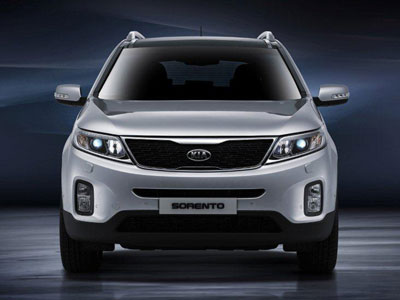
“The studio does mostly production work, probably 85% is actually making proposals for production programs. But we also do a show car maybe once a year. So there’s some advance work being done as well,” Mr. Kearns explained during an interview shortly after the debut of the new 2014 Forte Sedan and refreshed 2014 Sorento crossover here at the show.

Before joining Kia in 2004, Mr. Kearns was a General Motors man, his most notable work being the “art and science”-themed 2002 Cadillac CTS sedan. In the eight years he’s been running the Kia’s West Coast design studio, Mr. Kearns has overseen the debut of some of the brand’s most groundbreaking designs; vehicles that have driven the Korean automaker from an also-ran to a design leader, such as the original, 2006 Soul concept, 2007 KUE crossover concept (that previewed the current Sportage) and the 2008 Kia Koup concept, that led directly to the current Forte Koup two-door.

He explained that his team’s goal is to create a look that offers a lot of “design content” or “design value,” which supports Kia’s fundamental brand values.

As chief designer, Mr. Kearns puts it this way: “If we can create a design that looks more expensive — or you feel you’re getting more for your money — then I think we’ve done our job. You can see that in the Optima. You can get every option on that car, and it’s hard to break $35,000. But the design — for the average person, anyway — looks like a BMW or a Euro-something that maybe should cost $55,000.”
 
Mr. Kearns’ “design value” ethos shows up on the sales charts as well. The majority of Kia’s biggest sellers in North America originated from his studio.

“The original Forte sedan and five-door hatchback, the current-generation Sorento and the new Sorento facelift, the Sportage, the new Rio sedan and five-door all came from our studio,” Mr. Kearns says. This all means that good design is helping sell more Kias.

For example, owning the industry-leading sales growth record for 47 consecutive months, Kia Canada just had its best November ever with a total of 5,719 new vehicles sold — a 17.8% gain over the same period a year ago. The automaker’s year-to-date total of 73,840 vehicles reflects a 19.7% gain, and puts Kia on track for another record year in Canada.

After the reveal of the new 2014 Forte Sedan, it’s hard to see Kia straying too far from this current path of success. Arguably, the front-wheel-drive, five-passenger four-door is suddenly the most sophisticated-looking car in its class. And Mr. Kearns says that’s no accident.

“The overall shape of the car and proportions, can give an impression of value. And with the new Forte, I think we’ve done a good job with that,” Mr. Kearns explains proudly.

The Kia designer also explains that much of the new Forte’s design value can be found in the details.

“The LED daytime running lamps, the beltline, the chrome door handles — some of those are things that normally you might not see on a comparable Honda, Nissan or Toyota,” Mr. Kearns says.

While the 2014 North American Forte shares its platform with the foreign-market Kia Cerato, the two cars are separate designs. Mr. Kearns’ studio handled the North American car’s exterior and interior design, then followed the car as it made its way from his designer’s sketches to the factory floor.

“We work the design up to a certain point. Then it gets finished for production in Korea, where we oversee the engineering refinements, powertrain evaluations, aero tweaks, and any manufacturing issues,” Mr. Kearns says.
 

Source: http://life.nationalpost.com/2012/12/17/kias-new-design-identity-leads-to-record-sales/

Monday, December 10, 2012

KIA Motors Corporation : 12/07/12 - NEW CAR BUYERS RANK THE KIA SORENTO AND SPORTAGE AS THE BEST VALUE IN THEIR SEGMENTS IN NEWLY RELEASED CONSUMER SURVEY


IRVINE, Calif., December 7, 2012 - Kia Motors America (KMA) is one of the fastest-growing car companies in the U.S., and its two popular crossover utility vehicles have acquired an impressive collection of awards and accolades from industry observers.  This week, the brand's two CUVs received a different type of recognition when Strategic Vision revealed that new car buyers identified the 2013 Sorento and 2013 Sportage as the number one ranked vehicles in Total Value in the Medium and Small SUV segments, respectively, in the research firm's latest Total Value Index® (TVI) study.

More than 350 new vehicles were vetted and over 77,000 buyers who purchased models from September 2011 to June 2012 were surveyed to compile Strategic Vision's 16th annual TVI study, which revealed that quality and innovation shaped buyers' opinion of overall values.  "The result shows that innovation is the strongest single predictor of which cars, brands and corporations are seen as the best value, or 'Total Value' in our study," stated Alexander Edwards, president of Strategic Vision.

"Kia takes great pride in advancing value to new levels of sophistication, and Strategic Vision's 'Total Value' recognition is gratifying because it is based on feedback from Sorento and Sportage customers," said Michael Sprague, executive vice president, marketing & communications, KMA.  "This honor speaks to Kia's goal of producing cars that are not only affordable but also dynamic in terms of their design, performance and cutting-edge technology attributes."

The Sorento combines fun and functionality in a refined and value-minded CUV with impressive power.  Kia's longest running nameplate, the Sportage, offers design and performance in a compact CUV with modern amenities and a fun-to-drive personality.

Kia's Unprecedented Growth

 Kia Motors is one of the world's fastest moving global automotive brands; from 2009-2011 Kia launched more new vehicles in the U.S. than any other automaker, and under the guidance of chief design officer Peter Schreyer earned a reputation as an industry leader in automotive styling.  Kia Motors America's full line of fun-to-drive cars and CUVs has earned critical acclaim and dramatically increased consumer awareness, perception and consideration for the brand.  In 2011, KMA recorded its 17th consecutive year of market share growth, thanks in part to the largest increase of any major brand in perceived quality[2] and the industry's highest brand loyalty ranking[3].  Kia's U.S.-based manufacturing facility in West Point, Georgia - KMMG - is responsible for the creation of more than 10,000 plant and supplier jobs and builds two of the company's best-selling vehicles in the U.S. - the Sorento CUV and Optima midsize sedan*.  Kia's value and technology-laden lineup also includes the Sportage compact CUV, Soul urban passenger vehicle, Optima Hybrid, Forte compact sedan, Forte 5-door compact hatchback, Forte Koup two-door coupe, Rio and Rio 5-door sub-compacts and Sedona minivan.

About the 2013 Sorento

 The 2013 Sorento incorporates all of the comforts of Kia's signature crossover utility vehicle with the functionality consumers have come to expect.  Built at Kia Motors' U.S. manufacturing plant in West Point, Georgia, the Sorento can be powered by any one of three capable engines including a robust 3.5-liter V6 engine with sportmatic shifting.  The Sorento also offers optional All-Wheel Drive, third-row seven-passenger seating, Bluetooth®[4], SiriusXM radio[5], Infinity®[6] surround sound and Kia's UVO powered by Microsoft® voice- activated infotainment and communication system[7].  The refined and value-minded 2013 Sorento is offered at a starting MSRP of $23,150[8].

About the 2013 Sportage

 The 2013 Kia Sportage offers value-, image- and safety-conscious consumers a striking design and a standout combination of fun-to-drive performance, the latest in-vehicle technologies, and an abundance of comfort, convenience and safety features all at a tremendous value.  The sleek and modern Sportage is available with either a 2.4-liter, 176 horsepower engine or a 2.0-liter, 260 horsepower Turbo GDI engine.  Inside the cabin, the Sportage offers a host of available technology features, including Kia's all new UVO Powered by Microsoft® hands-free, voice-activated infotainment system.  The 2013 Sportage features a starting MSRP of $19,000[9].

About Kia Motors America

Kia Motors America is the marketing and distribution arm of Kia Motors Corporation based in Seoul, South Korea.  KMA offers a complete line of vehicles through more than 755 dealers throughout the United States and serves as the "Official Automotive Partner" of the NBA and LPGA.  In 2011, KMA recorded its best-ever annual sales total and became one of the fastest growing car companies in the U.S. [10]  Kia is poised to continue its momentum and will continue to build the brand through design innovation, quality, value, advanced safety features and new technologies.

Information about Kia Motors America and its full vehicle line-up is available at its website - www.kia.com.  For media information, including photography, visit www.kiamedia.com.

About Strategic Vision

 Strategic Vision is a research-based consultancy with over thirty-five years of experience in understanding the consumers' and constituents' decision-making systems for a variety of Fortune 100 clients, including most automotive manufacturers.  Its unique expertise is in identifying consumers' comprehensive motivational hierarchies, including the product attributes, personal benefits, value/emotions and images that drive perceptions and behaviors.

 
source: 4-Traders.com